International runways do more than forecast fashion trends. They also reveal opportunities for the textile industry, from raw material selection to fabric development, finishing techniques, and product-related technologies.
For the Spring/Summer 2027 (SS27) season, collections by Chanel, Issey Miyake, Simone Rocha, Saint Laurent, and Prada, alongside the technology-driven approach of Anrealage, demonstrate how creative experimentation can pave the way for new solutions.
For brands, manufacturers, retailers, and buyers, interpreting these movements is a way to anticipate demand, refresh collections, and identify commercially viable development opportunities.
Explore five runway insights and their implications for the B2B textile industry.
Chanel: Sheer Fabrics, Lightness, and a Fresh Take on the Classics
In the Spring/Summer 2027 collection, Matthieu Blazy revisited Chanel's signature codes through an approach that combines historical references, lightness, and new interpretations of classic pieces. Sheer fabrics, ornamental details, and lingerie-inspired elements expand the possibilities for garment construction and styling.

Key takeaways from Chanel for the textile B2B market
- Versatile fabrics: Materials that transition across different occasions and product categories.
- Distinctive prints: Exclusive patterns as a tool for product differentiation.
- Perceived value: Finishes and quality standards that support the positioning of the final product.
For textile suppliers, the challenge lies in balancing aesthetics, quality, and production feasibility. Fabric selection, material performance, and consistent finishing are essential to translating runway references into commercially competitive products.
Issey Miyake: Textile Engineering and New Relationships Between the Body and Fabric
In Figure of Ma, Satoshi Kondo's collection for Issey Miyake explored the relationship between the body, space, and clothing. Volume, movement, and sculptural constructions highlighted how material performance can actively shape garment design.
Rather than simply following the body's contours, fabric becomes an integral part of defining shape, movement, and the overall wearing experience.

Key takeaways from Issey Miyake for the textile B2B market
- Material research: Structures, textures, and fabric constructions that expand design possibilities.
- Textile engineering: Fabrics that combine movement, lightness, and performance.
- Co-creation: Developing solutions alongside brands from the earliest stages of collection development.
Simone Rocha: Ornamentation, Sheer Fabrics, and Surface Appeal
Simone Rocha explored contrasts between delicacy, ornamentation, and garment construction, reinforcing the potential of intricate details to create products with a distinctive visual identity.
For the textile industry, this movement highlights the importance of fabric surfaces and finishing techniques in differentiating collections.

Key takeaways from Simone Rocha for the Brazilian textile B2B market
- Distinctive surfaces: Textures, raised details, and special effects that add value.
- Creative finishing techniques: Exploring transparency, gathering, and specialized finishes.
- Market-oriented development: Adapting expressive materials to commercially viable applications.
The challenge for brands is to balance creative expression with cost, lead times, and production repeatability. Differentiation depends not only on exclusive materials but also on the ability to reproduce intricate details consistently at scale.
Saint Laurent: Metallic Finishes and Production Consistency
In the Spring/Summer 2027 collection, Anthony Vaccarello reinforced Saint Laurent's visual identity through bold silhouettes, luminous surfaces, and a sophisticated approach to glamour. Metallic effects and rich-looking materials underscore the role of finishing techniques in shaping perceived value.

Key takeaways from Saint Laurent for the Brazilian textile B2B market
- Premium finishes: Shine, luminosity, and surface effects as product differentiators.
- Production consistency: Reproducing color, hand feel, and appearance consistently across batches.
- Technical expertise: Turning specialized capabilities into attributes valued by brands.
For the textile B2B market, finishing is a strategic stage of product development. The ability to reproduce an effect consistently while meeting approved specifications helps minimize quality deviations and preserve the positioning of the final product.
Prada: New Interpretations of Materials and Construction Techniques
In the Spring/Summer 2027 collection, Miuccia Prada and Raf Simons placed skirts at the center of their experimentation, presenting a range of silhouettes, materials, embellishments, and construction techniques.
The collection demonstrates how an established product category can be reinterpreted through the combination of raw materials, garment construction, and surface techniques.

Key takeaways from Prada for the Brazilian textile B2B market
- Applied research: Exploring new applications for existing raw materials and fabric structures.
- Surface technologies: Experimenting with pleating, embroidery, special effects, and material combinations.
- Resource efficiency: Pursuing innovation through better raw material utilization and more efficient production processes.
Innovation can also emerge from applying different techniques, combining materials, and developing new solutions for well-established product categories.
Special Mention: Anrealage
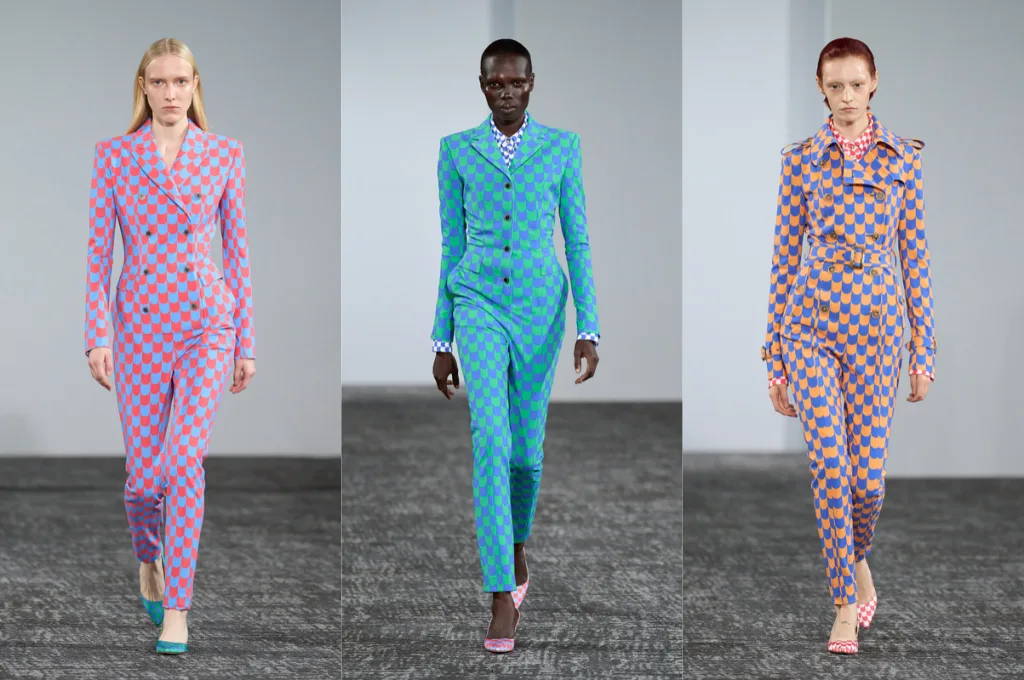
The Japanese brand Anrealage, founded by Kunihiko Morinaga, is known for bringing fashion, technology, and material experimentation together. For its SKIN collection, presented during the Spring/Summer 2027 season, the brand collaborated with E Ink to develop color-changing dresses using E Ink Prism™ 3 technology.
This approach demonstrates how integrating materials, technological components, and garment construction can expand the possibilities for interaction between products and users.
Key takeaways from Anrealage for the Brazilian textile B2B market
- Technological innovation: Bridging the textile industry with advanced printing and smart materials.
- More sustainable processes: Exploring alternatives that reduce water, energy, and input consumption.
- Industrial partnerships: Connecting suppliers, research centers, and brands to develop new applications.
Not every runway innovation is ready for large-scale production. Nevertheless, these experiments help identify new directions for product development and encourage collaboration across different sectors of the value chain.
What Do Spring/Summer 2027 Trends Mean for the Brazilian Textile Industry?
The SS27 collections show that opportunities in the textile market extend beyond the creation of new raw materials. They also lie in how materials are engineered, finished, and applied to the final product.

Three areas deserve particular attention from brands, manufacturers, and buyers:
1. Technical Differentiation
Fabrics with specific drape characteristics, controlled transparency, embellished surfaces, and distinctive finishes can increase perceived value and help brands develop collections with a unique identity.
2. Collaborative Development
Bringing brands, product teams, and suppliers together from the earliest stages makes it possible to assess materials, validate applications, and align aesthetic, technical, and commercial requirements before production begins.

3. Production Efficiency and Quality
Process standardization, quality control, and appropriate material selection help reduce discrepancies between approved samples and finished products. When supported by performance indicators and validation procedures, process optimization can also contribute to more efficient resource utilization.
These priorities are particularly relevant in a market where brands must balance novelty, positioning, costs, lead times, and production predictability.
How Does Textile Sourcing Turn Trends into Commercial Opportunities?
Sourcing goes beyond identifying suppliers. It connects market research, raw material selection, product development, technical evaluation, and production planning.
For buyers and product managers, this process helps identify suitable materials, evaluate development alternatives, and build collections aligned with brand positioning and market demand.
In practice, interpreting Spring/Summer 2027 trends means asking strategic questions:
- Which materials can deliver the desired visual effect?
- Which finishing techniques offer the best balance of appearance, quality, and cost?
- How can consistency between the approved sample and bulk production be ensured?
- Which technologies and suppliers can make new applications commercially viable?
- How can an international runway reference be translated into a product suited to the brand's target market and audience?
Answering these questions helps connect fashion trends, material intelligence, and product development decisions.

JBG Sourcing: From Trend Research to Product Development
At JBG Sourcing, we connect brands with development opportunities, raw materials, suppliers, and international production capabilities.
Our approach to trends goes beyond what appears on the runways. We also explore how colors, materials, constructions, and finishes can be translated into solutions for the market.
Because in textile B2B, a competitive advantage lies not only in identifying what's next, but also in understanding how to turn those references into viable, differentiated products aligned with each business's objectives.
Your next collection starts with the right development decisions. Let's explore new possibilities for your product portfolio.